Hello, I’m Veronica
The sky is not completely dark at night. Were the sky absolutely dark, one would not be able to see the silhouette of an object against the sky.


-
OF THIS LIFE
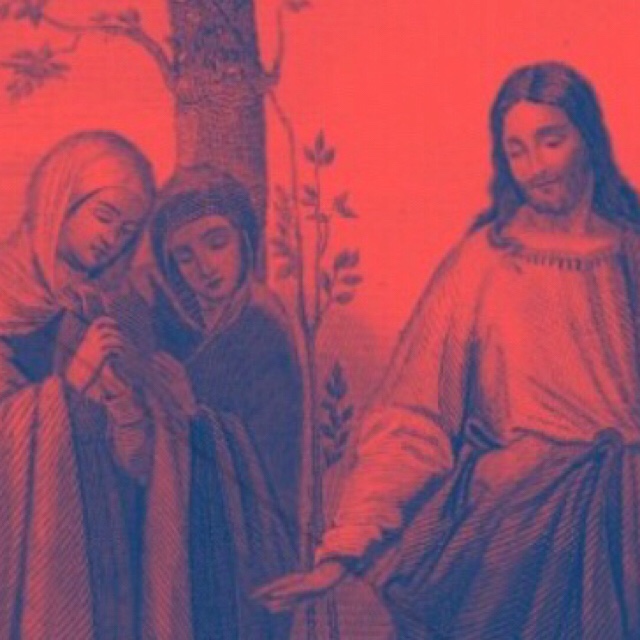
Sing with me Jesus, because your voice tastes like a nectar, and mine is just a puddle of corruption and emptiness. Just a smile, to behold from your sacrificial face dissolves the ageless doubts that lurks inside my hearts. Uncertainty is a ferocious beast, tearing everything apart, from within me. I come, to tame my insanity; domiciled in the essence of your benevolence and tenderness
Some days, Jesus, I find you so near, like pennies inside my pockets— a change for the beggarly, the wounded, and some more left for tomorrow. I love that nearness of your presence, please teach me to know how to align and sustain your many graces, when you are near
I am always near, my child. My presence surrounds all who expects and anticipate my friendship. I desire your friendship more than you could ever desire my nearness. Would you make me your portion? That, I am everything you’ll ever want; more than silver and gold
My hearts leaks the little I gather. My soul is pressed against my will. I succumb to the many voices in my ears. Everything is after my heart, and I lose control of your pursuit. Jesus, help my infirmities. Pull me from the dark trenches, and light up my candle. My soul is battered on the auction block of distractions, and the world has purchased my soul for free. Jesus, please, help me — redeem my heart from the world of self, to live just for you
Just for you. Jesus, just for You Make this heart locked up into yours, and will your wills through my vessel, until all I am is your expression. My heart is longing after you, my soul is thirsty after you, to drink from the wells of your salvation, Jesus, a friend so dear to me. Please, draw me, until I leap over every lustful walls that hinders, and fall humble in your presence, like a desperate migrant, in longing, for a safe haven
I stand at the door daily. I beckons on the doors of thy heart, my bride. My heart longs for you, to hear the stories of your heart, and tell you my own burdens that concerns you, and many of your brothers and sisters, wandering like sheep’s without a shepherd.
Jesus, can I say “thank you.” Is it enough to just say thank you? This is the will of my Father, that your life is wrapped in appreciation of your union with me. Imagine if your ways is not pleasing to the Father. Will He say, “Well done?” The Fathers way of saying thank you is when your ways are mingled into his purposes, and obedience is your anchor. You will share His pleasure, that the two has become one in living. You will drink from His appreciation, of your participation in His will. So to say thank you, is to acknowledge the Fathers participation with you, in all that concerns you and more
Thank you Jesus. Your nearness makes me whole. I am a wingless bird without your nearness. May the measure of my days be the measure of your dominion. You and I, forever!
-
THE TESTIMONY OF THE CHRIST
We had the sentence of death in ourselves, that we should not trust in ourselves but in God who raises the dead. (2 Corinthians 1:9)

You know that those who are not the Lord’s people are not alive to the fact that they are dead. Death is not the great reality to them until they come to their body dying. But in their ordinary life when things are going on and there is health and provision, death is no reality to them. But death is brought home to the child of God. Immediately we get into God’s hands this thing begins to be brought home to us – that we are not much good, we cannot stand up to things, we cannot go through. Our natural life and resources do not count here. The course of a true Christian life in the hands of God is that of being more and more brought to the experience of helplessness. Is that not true? Yes, of helplessness, of the impossibility of everything. Do not think things have gone wrong if that is becoming your consciousness. You may take it that you are in an immature spiritual stage if you have not come to that realization that in the realm into which you have been introduced in your relationship with God, you have no resource. You are as a dead man. The death fact is brought home to you, is made real.
Ah, but on the other side, resurrection is taking a certain form over against that. With that background and with that basis, more and more the child of God is being brought to the position where he or she has to say: “That was the Lord, it is the Lord; I cannot account for that, I am not the one who accounts for that, it is all of God,” and you know quite well that resurrection is all of God. You can go a long way in many clever things and inventions, but you have not got as far as raising the dead yet. That is God’s prerogative. That is only God. And so in the hands of God the child of God is being brought progressively more and more, and still more, to the place where they have to say, “It is of God, it is all of God” and that is the testimony coming out. The Lord did that, the Lord is doing this. Is that not in Israel’s history in the wilderness? See how again and again they were brought to an end, which did seem to be an end… nothing beyond this, and then they had to come out with a new song – The Lord did it! It is victory over death, it is the power of resurrection Life.
By T. Austin-Sparks from: The Testimony of the Christ – Chapter 6
-
THE SCHOOL OF SONSHIP
by T. Austin-Sparks
Reading: Gen. 12:1-2,7-10; 13:1,3,4; 17:1-8,19; 18:13-14.

THE SCHOOL OF SONSHIP
The key to the life of Abraham is that word “sonship”. What was the immediate net result of Abraham’s life on earth? Well, God found him in Ur of the Chaldees, ordered him to get out, to go to another land. He did it, he arrived there, took a brief survey, found difficulties, cleared out, had to go back again and start wandering about, up and down; various incidents coming into the course of things. The Lord appeared to him, said a lot of wonderful things, made promises and covenants. Abraham went through some deep trying experiences and getting to know the Lord in a deep way, reached the place where he could be called “the friend of God”, and died and was buried. What is the result of it all? Only one thing – Isaac, and that was what he went through everything for. The upshot of his whole life was sonship in the true spiritual and Divine sense, not in any earthly sense, but sonship according to God’s mind, and thus you have to take everything in Abraham’s life as related to sonship, sonship being its inception and its objective.
Service and Sonship
I do not think anyone will doubt that Abraham was a great servant of God. Now looking back from this present standpoint, taking in all the generations and all the centuries from Abraham’s day till now, we have to say that Abraham has proved to be a very profitable servant, for Christ came of the seed of Abraham and all the values of Christ are in Abraham’s life. If that is true, if Abraham has served God’s purposes so wonderfully, then we have one more great emphasis upon this, that service is bound up with sonship and what is meant by sonship spiritually is that which serves God most fully.
Faith and Sonship
There are some things in Abraham’s life, as of course in the life of everyone called into this true service of sonship, which are the governing things. There is that one foremost thing which we always associate with Abraham – faith.
The Lord said that He would give Abraham a son and told him that he should call his name Isaac, and Isaac means “to laugh”. When the announcement was made, Sarah laughed the laugh of ridicule, and the Lord said, “Wherefore did Sarah laugh? Is anything too hard for the Lord?” Abraham believed God and the laugh of ridicule was turned into the laugh of triumphant accomplishment and that is the outworking of faith. Faith stands over against that which nature says is far too hard even for the Lord. Faith laughs at impossibilities and cries, ‘It shall be done!’ Isaac, sonship, is the embodiment of the laugh of triumphant faith over against all that is said by nature to be too hard even for the Lord. Isaac does no great exploits; he re-digs a few wells and just quietly walks about the earth saying, “I am here, but my being here means that the laugh of ridicule because of the utter impossibility has been wiped out. God has done it.” That is sonship.
That is what God is doing with you and me, and with all those who are really put into His hands for Him to reach His end in them. He brings us into situations and to times when everything says, ‘It is impossible! It is too late! It cannot be! Even God could not do this!’ Then it becomes a living actuality that simply says to you afterwards, ‘Here I am!’ It is a terrible thing while we are going through it. Faith is subjected to the most terrible testings in order to get to that end of sonship.
The First Test of Faith
Now, there is this point about Abraham’s tests of faith. His first step of obedience was quite spontaneous and without difficulty. He got an assurance and he moved out on it, but when he got to the place which had been mentioned, I suppose the first thing that he was conscious of was a question as to whether he had really got to it, whether he had not made a mistake. The Canaanite was in the land, and there was a mighty famine. There was nothing there prepared for him at all. He simply found himself in a desolation and the first test of faith is, “Well, am I after all mistaken? Have I taken the wrong course, have I missed the way somewhere?”
Now note: Abraham built an altar. He got over those initial difficulties by planting something which says in effect, “I take this land in the Name of the Lord.” An altar always means something is made God’s, and faith triumphed against the appearances for the moment, and said, “I take this for God.”
Deviations in the School of Sonship
But then he moved, and the famine was everywhere, the trial intensified, and he went down to Egypt. He deviated under the trial. His faith for the moment failed. You know what happened in Egypt. He got into greater difficulty and did not find the Lord there, and had to go back again, back to his altar. Abraham deviated more than once by wavering faith. He deviated a little later on and found himself in difficulties again, having to use deception to get out of trouble. He deviated over Hagar and Ishmael, but the point is this: God never accepted any deviations. The Lord came back every time to the point – sonship. “I am not accepting your Ishmael! I am not accepting your alternatives! I stand here, I hold you to this! There are no deviations.” God never moved away from His purpose – and that was Isaac.
Now, in this School of Sonship, we all have our deviations. Faith sometimes gives way; we let in a question and that question, like the thin edge of a wedge, is driven home until we find there is a gap between us and the Lord and the question is ever making that breach wider. Everything seems so contrary to what we might expect if we took the sacrificial path of consecration to the Lord and obedience to His indicated will. It might be there is a question which is causing growing uncertainty, unrest, loss of joy, getting you simply moving round that circle occupied with the problem of the situation. It is written for us in the life of this servant of God – the way of sonship is this way, and the absence of proofs and evidences, the stripping off of all that realm of things to give outward assurance that we are right, is all of a piece with what God is doing to bring forth sonship. This is the true test of faith. Do we, after all, believe God as being faithful apart from any of the evidences given by Him as to His faithfulness? Abraham never possessed that land. Up to the day of his death he was still looking for a city which hath foundations. But the greatest of all achievements was accomplished in him by God, and he stands as the father of the faithful. Everything dates back to Abraham’s faith. Those who have gone the way of Abraham in the School of Sonship, who have been brought to know God along the line of faith’s deepest testing and proving, are those who have got the substance of things, who have resources for really spiritual service.
I wonder how many of you know something about these deviations and what they mean in the inward life? Deviation because of a doubt. You are out of the way and you know it. What are you going to do? God is never coming down to us in our Egypt. If we go down there, the Lord is not coming after us. We have got to come back to the altar where our tent was first pitched in relation to God’s purpose, back to the point where we went off. The Lord remains by His altar, and we have to come back and call upon the Name of the Lord there.
The Lord has set His heart upon sonship and the way of sonship is faith. Egypt is an alternative to faith; Egypt is the realm of things seen. You may get, just for the time being, what you sought in Egypt, but so far as the Lord’s supreme purpose in your life is concerned, you have missed it. The only thing to do is to get back.
Resurrection and Sonship
Faith’s supreme triumph is seen in resurrection. That is the issue of Abraham’s life. Isaac is given, but even Isaac becomes an occasion and means of a new test of faith. “Take now thy son and offer him”. But the apostle tells us that he received him back as from the dead by faith. He accounted that God was able to raise the dead. Faith went on to resurrection, and sonship, standing in the power of resurrection, represented the supreme triumph of faith.
Now, in principle that means for us that things go altogether beyond human hope and if something is taken into death, then there is no power on earth that can save it. Death is the end of all things here. If there is a refusal to accept death as the end, but God as the end, faith triumphs over death. The way of the Lord with us in this School of Sonship is by the way on the one hand of death, and on the other hand, of resurrection, where God is the only power, hope and resource, and we are knowing God over against all human impossibilities, over against death. It is the deep way of sonship. But again and again it happens. The Isaac laugh! Many of you have laughed the laugh of Isaac, I am sure.
If we are going on with God, we are going this way. We are going to be put into really terrible situations from the natural standpoint – stripped of all, to find God. Oh, this finding of God is a terrible business – to the flesh it is terrible – finding God, coming to know God as the God of resurrection. Then, when you are there, you are in the place of the greatest service to God, you are in a position to serve the Lord in a very wonderful and a very fruitful way.
-
WISDOM FROM GOD
CHRIST BECOMING WISDOM TO THE BELIEVERS FROM GOD
Scripture Reading: 1 Cor. 1:30
In 1:30 Paul says that Christ Jesus “became wisdom to us from God: both righteousness and sanctification and redemption.” Paul does not say that Christ is wisdom to us; he says that Christ became wisdom to us. This indicates that at one time Christ was not wisdom to us, but that He later became wisdom to us. For example, to say that I am your friend is somewhat different from saying that I became your friend. To say that I became your friend implies that once I was not your friend, but now I have become a friend to you. Christ could not become wisdom to us before we were in Him. But when we believed in Christ, God put us into Him. Then Christ became wisdom to us.
Suppose that a certain young lady is in poverty. One day she marries a millionaire. On that very day she becomes rich. Formerly she was poor, but now she has become rich. In a similar way, formerly, because we were not yet in Him, Christ was not wisdom to us. But once we believed into Christ and God put us in Him, He became wisdom to us.
Notice that in verse 30 Paul does not say that Christ became our wisdom; he says that Christ became wisdom to us. For Christ to become wisdom to us is different from His becoming our wisdom. Day by day, we need Christ to be wisdom to us. We may again use electricity as an illustration. To speak of our electricity is different from speaking of electricity being to us. When electricity is to you, you receive an electrical charge. For electricity to be your electricity means that it belongs to you, but for electricity to be to you means that it is transmitted to you and that you experience it. Likewise, to say that Christ is our wisdom is rather general, not experiential. But when Christ becomes wisdom to us, we experience Him.
Paul had not only knowledge but also a great deal of spiritual experience. Furthermore, he knew the situation among the believers. As Christians, we may say, “We have Christ as our wisdom.” However, this does not mean very much in experience. It is similar to saying, “We have electricity as our power.” We may say this and actually not have light or heat, because electricity is not yet to us. We may also have Christ as our wisdom without having Christ being wisdom to us. We need Christ to become wisdom to us.
In verse 30 I appreciate the two phrases “to us” and “from God.” Christ became wisdom to us from God. The expression “to us from God” indicates something present, practical, and experiential in the way of transmission. Continually, Christ must become wisdom to us from God. This indicates a living, ongoing transmission. The words “to” and “from” indicate that a present, living, and practical transmission is taking place from God to us.
Paul composed verse 30 in the way he did in order to indicate to the believers in Corinth that Christ should continually become wisdom to them from God. Christ as wisdom should unceasingly flow from God to them. However, their actual situation was contrary to this. Christ may have been their wisdom, but He was not presently flowing to them from God. Once again I wish to point out that Paul does not say, “Christ is God’s wisdom,” or “Christ is your wisdom.” He says, “Christ became wisdom to us from God.” This indicates that Christ should continually flow from God to us and be our present and practical wisdom in our experience.
It is important for us to learn to apply the Bible to our experience. The Bible is not primarily a book of doctrine; it is a book of life, and life is a matter of experience. What is revealed in the Bible must be living to us and applicable to us in our experience.
In verse 30 both the punctuation and the grammar are significant. After the phrase “from God” there is a colon. This indicates that wisdom includes the three items which follow the colon, that is, righteousness, sanctification, and redemption. According to Greek grammar, the word “both” is used with respect not to two items but to three. Although this is awkward in our language, the translation is accurate according to the Greek. In verse 30 Paul definitely says Christ “became wisdom to us from God: both righteousness and sanctification and redemption.” This wisdom implies righteousness, sanctification, and redemption.
Christ was made wisdom to us from God as three vital things in God’s salvation: righteousness (for our past), by which we have been justified by God, that we might be reborn in our spirit to receive the divine life (Rom. 5:18); sanctification (for the present), by which we are being sanctified in our soul, that is, transformed in our mind, emotion, and will, with the divine life (Rom. 6:19, 22); and redemption (for the future), that is, the redemption of our body (Rom. 8:23), by which we will be transfigured in our body with His divine life to have His glorious likeness (Phil. 3:21). It is of God that we participate in such a complete and perfect salvation, making our entire being—spirit, soul, and body—organically one with Christ, and making Christ everything to us. It is altogether of God, not of ourselves, that we may boast and glory in Him, not in ourselves.
It is certainly correct to say that Christ is righteousness for our past, sanctification for our present, and redemption for our future. After we believe in the Lord Jesus and are justified, we need to live a holy life, a sanctified life. The subjective experience of sanctification implies transformation, a process which takes place in our soul. The redemption of our body will occur in the future. Thus, we were regenerated in our spirit when we believed in the Lord, we are in the process of being transformed, sanctified, in our soul, and, in the future, our body will be redeemed, transfigured.
Although this understanding is correct, we must point out that this is an interpretation of verse 30. Because it is an interpretation, we should not allow Paul’s meaning here to be limited by it. Yes, for a sinner to be fully saved, he must pass through three steps: regeneration in the spirit, sanctification in the soul, and transfiguration, redemption, in the body. When this process is complete, we shall be the same as the Lord Jesus. According to 1 John 3:2, we shall be like Him, for we shall see Him as He is. Today we are not like the Lord in our body. But when our body is transfigured, fully redeemed, we shall be wholly like Him.
Righteousness, sanctification, and redemption are not only related to our past, present, and future. Daily we need Christ as righteousness, sanctification, and redemption. Every day we need to be righteous, we need to be sanctified, and we need to be redeemed, not only in one matter, but in all matters. For example, in dealing with their children, some parents may still behave in an old way. Thus, these parents need to be righteous, holy, and redeemed in relation to their children
By Witness Lee /www.livingstream.com
-
BODY LIFE
Means of Growth: Body Life
Dennis McCallum and Gary DeLashmutt
I. WHAT IS BODY-LIFE?
Body-life refers to Christian fellowship as taught in the New Testament. There, the word koinonia, is usually translated “fellowship” or “sharing.” The word means “to have in common” or “to share.” In the Body of Christ, we are supposed to share the life of Christ with one another in a way that cannot be done in any other context. This is accomplished through the exchange of Christian love facilitated by our spiritual gifts. Such an exchange, called “ministry” (which simply means “service”), is the life-blood of growing Christians.
Clearly such koinonia is not just a matter of attending one or two meetings a week. It is much more than that. This is why the verse so often used to stress the importance of attending church (Hebrews 10:25 “. . .not forsaking the assembling together as is the habit of some. . .”), is frequently misunderstood today. This verse is often taken to mean that only our presence at church meetings is necessary. Instead, we find that according to 1 Corinthians 12:21 (“. . .the eye cannot say to the hand, `I have no need of you’. . .”), it is not just the presence of the other members that we need, but also their function. The Body of Christ should be seen as an organic union based on genuine personal relationships and mutual interdependence. The important point is not just that we attend meetings (although this is a necessary aspect), but that we authentically share the life of Christ with one another. Thus, “. . . speaking the truth in love, we are to grow up in all aspects into Him who is the Head, even Christ. . .” (Ephesians 4:15).
II. PRINCIPLES OF BODY-LIFE
- Because we are a part (and not the whole) of the Body of Christ, we need what the other parts of the Body supply (1 Corinthians 12:21, 22). For the same reason, the rest of the Body needs our specific function for its overall health (1 Corinthians 12:15-18). If we aren’t in fellowship, we cannot see needs or discover our spiritual gifts.
- Body-life helps to guard us against doctrinal imbalance in our Christian life. Paul traces excesses and heresy to lack of involvement with the rest of the church (Colossians 2:19; Ephesians 4:14,15).
- Involvement with other believers helps make more concrete God’s love for us and our love for God (1 John 4:20). It is accurate to say that God loves us through others, and others through us (Mt. 25:34-40). Therefore, love, whether given or received, with God or others should not be dichotomized (1 John 4:20,21).
- Since the ministry aspect of Body-life is practicing biblical love, it is central to the goal of Christian instruction (1 Timothy 1:5). Ministry counteracts a selfish, temporal value system by replacing it with investment in eternal things–people (see Mathew 6:19-21 and interpret in light of 1 Thessalonians 2:19,20).
- Victorious love output, based on knowledge of God’s love for us, is the biblical key to fulfillment in life (John 13:17; Acts 20:35; 1 John 4:16-19). Ministry gives an outlet and an unselfish purpose to the other means of growth. Apart from ministry, the other means of growth will tend to be viewed as purely self-serving tools, and thus will not result in long term growth.
- Barriers to developing Body-life may need to be addressed:
- Culturally glorified autonomy
- Broken or alienated homes which can lead to fear of intimate personal relationships
- Previous negative exposure to “church”
- Bitterness or moral impurity
- Ignorance of the biblical teaching on normative involvement in the church
- Exaggerated standard of qualifications for those who do ministry
- Discouragement over previous failure in ministry
III. PRACTICAL STEPS TOWARD BODY-LIFE
- Regular exposure to fellowship is the first requisite. This involves not only coming to meetings regularly, but also doing social things together and (most importantly) developing close friendships with believers.
Christians should realize that it was normative for the New Testament Christians to have significant fellowship virtually every day (see Acts 2:42,46; Hebrews 3:13). One of the best ways to facilitate this is by living with other committed Christians (including Christian marriages). - To develop ministry, we should begin by trying to meet various needs we discover in the people in our home church. This teaches us to actively search for needs, an essential ability for effective ministry.
- When we find needs which are beyond our ability to meet, we should find someone who is competent to help us. By watching them closely while they address a need, we can learn additional ministry skills.
- Personal discipleship by an older believer is very helpful in the development of ministry skills. The older believer can often answer questions or problems encountered. Discipleship is effective only when the goal is seen to be victorious love output on the part of the disciple.
Discipleship within the context of small groups is especially helpful for a number of reasons. The leader can disciple a number of people at once. Also, the younger believers can learn to work together and offer each other the encouragement, prayer and advice that is essential for effective ministry. - Persistence is important because relationships and ministry skills take time to develop. Any Christian can become highly competent in ministry, but such competence is the result of much effort, study, failure, etc. Often, those who are less gifted succeed in ministry because they have the determination to keep going.
IV. SELECTED SCRIPTURES:
- John 4:34
- John 6:1-13
- John 13:12-17,34,35
- Acts 2:42
- Acts 20:35
- Romans 12:4-16
- 1 Corinthians 12-14
- Galatians 6:2
- Ephesians 4:11-16
- Philippians 2:1-5
- Colossians 2:19
- Colossians 3:12-17
- 1 Thessalonians 5:14,15
- Hebrews 3:13
- Hebrews 10:24,25
- James 5:15-16
- 1 Peter 4:8-11
- http://www.dwellcc.org

About Me
The sky is not completely dark at night. Were the sky absolutely dark, one would not be able to see the silhouette of an object against the sky.
Follow Me On
Subscribe To My Newsletter
Subscribe for new travel stories and exclusive content.

